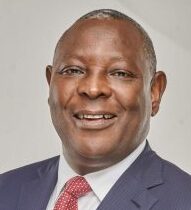
I think the idea behind the Oslo Award, and the potential impact it may have, is important and inspiring. Nobel Laureate He Kofi A. Annan
2011 Symposium
Business as an Instrument of Peace
Oslo, 17 October 2011
The Symposium investigated how business can work together with other stakeholders to promote the building of trust, leading to stability and peace.
The 2011 Research Symposium was in three parts. A breakfast debate at Litteraturhuset was followed by a presentation of detailed research findings at Oslo Konserthus. A late afternoon gathering at Oslo City Hall discussed the highlights from the day’s presentations.
Breakfast debate - Litteraturhuset (House of Literature), from 09.00-10.30
Presentation of Research - Oslo Konserthus (Oslo Concert Hall), from 11.00 to 15.00
Business for Peace Summit, as part of Oslo Innovation Week - Oslo City Hall, from 16.00 to 19.00
The day was a collaboration between:
OECD National Contact Point Norway (OECD NCP Norway)
United States Institute of Peace (USIP)
Institute for Corporate Responsibility (ICR-GWU)
International Council of Swedish Industry (NIR)
Peace Research Institute Oslo (PRIO)
Business for Peace Foundation (BfPF)
‘Peace through Trade’ is a motto held high by many, while skeptics maintain that trade instead often contributes to conflict and instability. During the 2011 Business for Peace Symposium, groundbreaking research was presented providing insights into how business and society best can work together in order to create the essential shared values that help foster stability and peace, in national and international contexts.
Not any kind of trade and economics, or any kind of business activity, may have such a positive effect. Colonialism, factories abusing workforces, and cronyism, for example, may sow the seeds for frustration and violence. Underneath the names and policies of “trade” are specific, concrete interactions among parties that may or may not be positive and constructive. An important aspect to consider is the nature of the interactions of particular businesses, particular business people, and particular stakeholders such as employees, shareholders, consumers, and members of the community.
PROGRAM OVERVIEW FOR OCTOBER 17.
09.00-10.30 Breakfast debate at Litteraturhuset (House of Literature). “Business in Development – from conflict to collaboration.” Leaders from business, politics and society joined to debate a variety of related issues: How are businesses dealing with the challenge posed by human rights and concern for the environment? How can Norwegian authorities contribute to assist businesses facing stricter demands? Can dialogue and mediation of disputes be effective approaches in conflict resolution between businesses and local societies? (Breakfast served from 08.30) Program in detail.
Program in Norwegian.
11.00-15-00 Research Presentations at Oslo Konserthus:
The findings of the «Business and Peace Task Force» was presented for the first time. It is the result of a collaboration between the Institute for Corporate Responsibility at the George Washington University School of Business, and the United States Institute of Peace.
«Peacebuilding in conflict-affected regions requires much more than boots on the ground, peace accords, security arrangements and focused diplomacy. Practitioners, scholars and policymakers agree that success in this regard requires the effective leverage of all stakeholders – including the business sector. This would facilitate a lasting end to protracted and costly conflict, and deliver tangible peace dividends.»
The Peace Research Institute of Oslo presented «Capitalist Peace – is Economic Exchange as Important to International Peace as Democratic Institutions?»
The presentation covered factors conducive to economic growth and the intensification of business relationships. The controversial notion of ‘Capitalist Peace’ is proposed in the study: that free markets and solid protection of property rights are as important as democratic institutions for international peace. Håvard Hegre has led the team of researchers responsible for the study.
The International Council of Swedish Industry has just finished an extensive study seeking to provide a framework for policy makers, business executives and CSR officers to better assess the role private sector actors play in peace processes. The framework will assist private sector actors seeking to assess and develop their corporate strategies and risk management in conflict-affected markets, with the overall goal of achieving lasting and mutually beneficial stability. NIR presented “Business Executives and Private Sector Actors as Peacebuilders”.
16.00-19.00 Philosopher’s Challenge – Business for Peace, Part II of the Oslo Innovation Week Opening Symposium at Oslo City Hall:
Philosopher’s Challenge
Is it naïve to propose that business can contribute significantly to the building of stability and peace?
As the day’s earlier event showed, there are certain guidelines that have proven effective, and that have resulted in considerable benefits for companies that pursue a more ethical and responsible approach in doing business. As will also be seen, important drivers such as the Internet and social media have a global reach, and are forcing businesses to listen and adapt in ways that government regulation may fail to achieve.
For the afternoon session, we asked the philosopher Henrik Syse to challenge the research presented earlier in the day. This proved both interesting and rewarding. Henrik Syse was in charge of developing the ethical investment framework for the world’s largest sovereign fund, the Norwegian Government Pension Fund. His extensive experience with the topic of ethical business, and his lively and inquiring mind, ensured a thorough vetting of the claim that business can be an instrument of peace. The goal of his challenge was to delineate the approaches business must adopt in order to unleash the considerable peace building potential that too often goes unrealized.
A panel discussion followed, where the academics who presented earlier in the day discussed their findings.
Program in detail for afternoon session.